
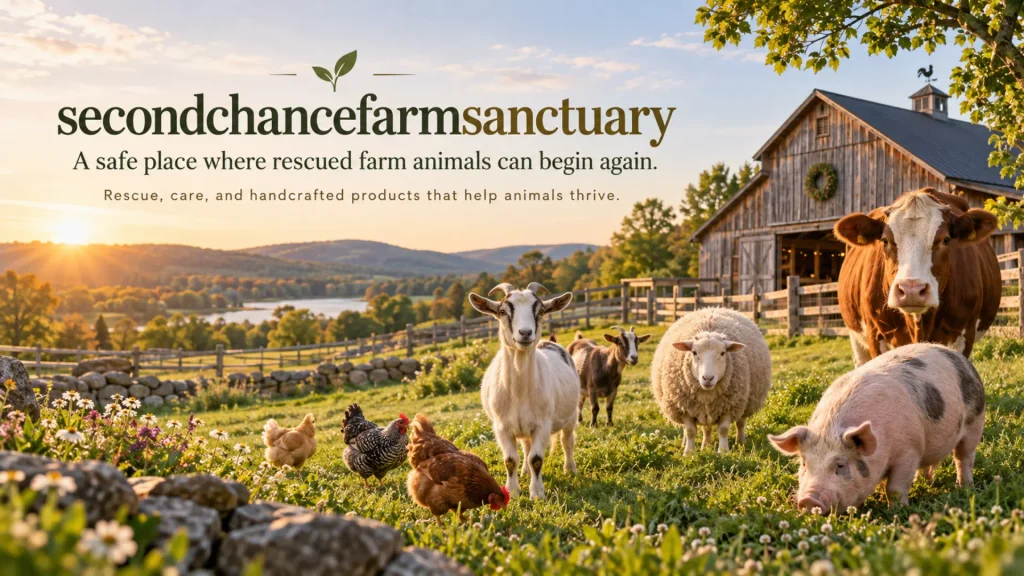
Farm Animals Find Hope at Second Chance Farm Sanctuary
Second Chance Farm Sanctuary is a nonprofit animal sanctuary based in Ashby, Massachusetts, where rescued farm animals are given the opportunity to live in safety and receive the care they need. The sanctuary is part of the Leclerc family homestead, a farm with roots dating back to 1999. Over the years, animal rescue became an increasingly important part of life on the property, eventually developing into the sanctuary that operates there today. The organization is recognized as a 501(c)(3) charitable nonprofit focused on animal welfare, and its work centers on providing refuge and ongoing care for animals whose circumstances have left them in need of a secure home.
Today, more than 40 animals are described as members of the sanctuary family. Their backgrounds are not all the same. Animals have arrived through rescue situations, neglect cases, changes in an owner’s circumstances, the death of an owner, and abandonment. Some have required significant physical care, while others have needed time, patience, and a stable environment before becoming comfortable in their new surroundings. The sanctuary’s approach recognizes that rescue is only the first part of the process. Food, shelter, veterinary attention, appropriate space, daily observation, and long-term responsibility are what make a second chance possible.
Contents
A Farm Built Around Second Chances
Second Chance Farm Sanctuary grew from a working family homestead rather than from a large institutional facility. The farm’s history extends back to 1999, and its animal-centered mission developed alongside everyday farming, gardening, and land stewardship. Public descriptions of the sanctuary document animals arriving under many different circumstances, including farm rescues, neglect, abandonment, and the loss of previous caregivers. Among the animals described over the years have been sheep with sensory disabilities, an injured or neglected hen, goats needing rehabilitation, and other animals requiring individualized support. This history has shaped a sanctuary model in which each resident is treated according to individual needs rather than as part of a production system.
Rescue Is Only the Beginning
Providing refuge to a farm animal involves far more than transporting that animal to a safe property. Sanctuary residents need dependable access to appropriate feed, clean living areas, secure fencing, suitable shelter, routine monitoring, and veterinary care when illness or injury occurs. The sanctuary identifies hay, grain, veterinary bills, emergency procedures, and other animal-care expenses among the practical costs supported by its fundraising and shop activities. These are recurring responsibilities rather than one-time rescue expenses, particularly when a sanctuary commits to caring for animals that may remain residents for the rest of their lives.
Caring for Animals While Caring for the Land
The farm also connects animal care with its approach to the land. Second Chance Farm Sanctuary describes using practices such as rotational grazing, vermiculture, natural composting, and chemical-free growing methods. Rotational grazing allows pasture areas to be managed in sections rather than continuously used in the same way, while composting and vermiculture return organic material to the farm system. Herbs, flowers, and other plants grown on the property also form part of the sanctuary’s connection between farming and its handcrafted products. These practices reflect the farm’s broader focus on using its land as both a home for rescued animals and a productive homestead.
Handmade Products with a Practical Purpose
Alongside animal rescue, the farm operates 1812 Apothecary, a collection of handcrafted products influenced by gardening, herbal traditions, and historical research. Public product descriptions show that many herbs and flowers used by the business are grown on the farm, while some plant materials are gathered from the surrounding property. Products are prepared in small batches, and the sanctuary states that it develops its body-care products from the ground up rather than relying on premade product bases. This connection between the garden, historical recipes, handcrafting, and animal care has become a distinctive part of the sanctuary’s fundraising model.
Every Purchase Helps Fund Animal Care
The sanctuary states that proceeds from its shop are directed toward the care of its rescued animals, including veterinary expenses, hay, grain, emergency needs, and improvements to sanctuary facilities. In its 2026 shop announcement, the organization also identified new fencing and a horse barn among the projects being supported by sales. The model gives customers a practical way to contribute while purchasing handcrafted goods rather than separating the sanctuary’s fundraising from the farm’s creative work. The scale of that support has grown substantially: the sanctuary’s Etsy shop has operated since 2015 and had recorded more than 20,000 sales by 2026.
Individual Care for Individual Animals
One of the defining realities of sanctuary work is that rescued animals do not arrive with identical needs. Some require treatment for previous injuries or illness. Others may have disabilities that make their daily care different from that of other animals. The sanctuary has publicly shared examples that include deaf and blind sheep, neglected goats, rescued poultry, and Doobie, a blind resident who adapted to life at the sanctuary. These examples illustrate why long-term animal care depends on observing each resident as an individual. Physical recovery may be part of rehabilitation, but security, appropriate companionship, familiarity with caregivers, and a predictable daily routine can also become important parts of life after rescue.
Supporting a Lifetime of Care
A sanctuary is ultimately a long-term commitment. Barns must be maintained, fencing must remain secure, pastures need management, feed must be purchased, and veterinary treatment has to be available when an animal needs it. Second Chance Farm Sanctuary combines nonprofit animal welfare work with farming, gardening, and handmade production to help meet those continuing responsibilities. Whether support comes through a purchase, a donation, or greater awareness of the realities of farm-animal rescue, it contributes to the same objective: giving animals that have already experienced hardship a stable place where their needs can continue to be met. For the sanctuary’s more than 40 animal residents, that commitment turns the idea of a second chance into something practical safe surroundings, regular care, and a home intended to last.
Where is Second Chance Farm Sanctuary located?
Second Chance Farm Sanctuary is located in Ashby, Massachusetts. The nonprofit sanctuary operates on the Leclerc family homestead and provides a safe home for rescued farm animals.
What animals does Second Chance Farm Sanctuary care for?
Second Chance Farm Sanctuary cares for a variety of rescued farm animals, including goats, sheep, chickens, and other animals in need. The sanctuary provides food, shelter, veterinary care, and long-term support for its residents.
What is the mission of Second Chance Farm Sanctuary?
The mission of Second Chance Farm Sanctuary is to provide rescued farm animals with a safe, loving, and permanent home. The sanctuary is dedicated to giving animals a second chance at life through compassionate care, a peaceful environment, and a commitment to their long-term well-being.